
Programs showcase丨Action Plan for Global Youth Development 2025(NO.1-NO.5)
The Action Plan for Global Youth Development(APGYD) was initiated and promoted as an international partnership proaramme by theAll-China Youth Federation, United Nations aencies and vouth oraanizations from various countries,It aims to build a olatform for bestpractice programs and a community of youth leaders for the implementation of the United Nations 2030 Aaenda for Sustainable Develop-ment and the Global Development Initiative. By selecting and promoting the Excellence Actions that contribute to global development andyouth development, the APGYD actively promotes international youth actions, and empower youth development, to pool the strength ofyouth to build a community with a shared future for mankind.Between 2022 and 2025, the APGYD selected 200 Excellence Actions from 63 countries in two batches, These proarams focused on the fol-lowing seven priority areas: poverty elimination,zero hunger and food security,future-oriented digital technology, climate action and greendevelopment,inclusive and equitable quality education, health and wel-being of youth, and youth employment and entrepreneurship.These Excellence Actions cover a wide ranae of areas, apply innovative working methods and have significant social influences. They areimplemented by youth organizations, social enterprises, media,enterprises, universities and think tanks, and theirteam and leaders aremainly young people.The APGYD has gained supports from ILO, FAO,UNESCO, UNICEF, UNDP, UNFPA, UNCCD, UN in China, ASEF and partners around theworld.
We sincerely invite all partners and young people to join the APGYD to promote youth development and global development together.

The "Point Grass Into Gold" initiative, led by China's Shihezi Dongke Livestock Technology Co., Ltd., utilizes microbial fermentation technology to convert agricultural waste such as cotton stalks into sustainable, high-nutrient animal feed. This approach addresses critical issues of resource waste and livestock feed shortages. Since 2010, the project has optimized microbial strains to reduce toxins by 90% and improve feed quality.
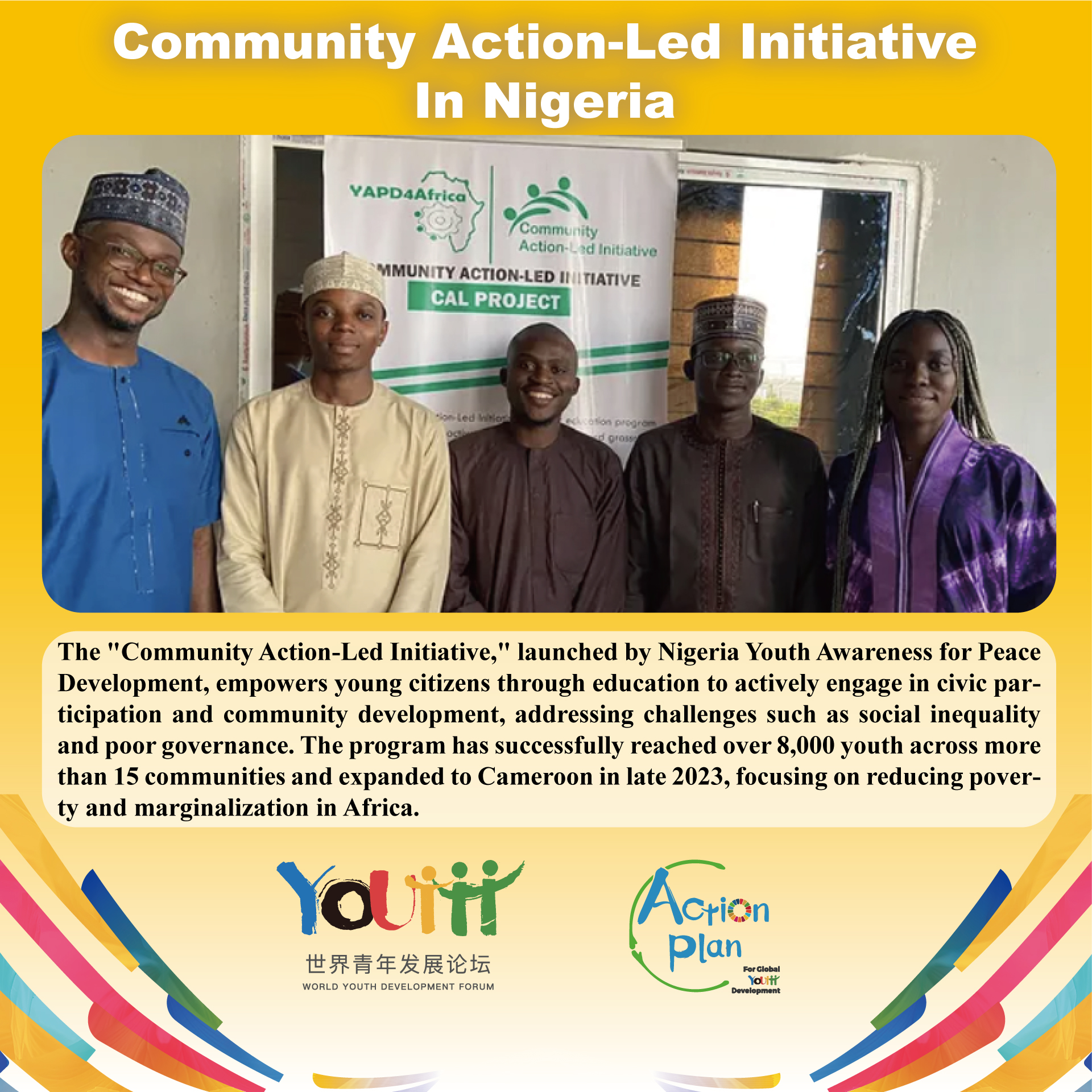
The Community Action-Led Initiative in Nigeria The "Community Action-Led Initiative," launched by the Nigeria Youth Awareness for Peace Development, empowers young citizens through education to actively engage in civic participation and community development, addressing challenges such as social inequality and poor governance. The program has successfully reached over 8,000 youth across more than 15 communities and expanded to Cameroon in late 2023, focusing on reducing poverty and marginalization in Africa.
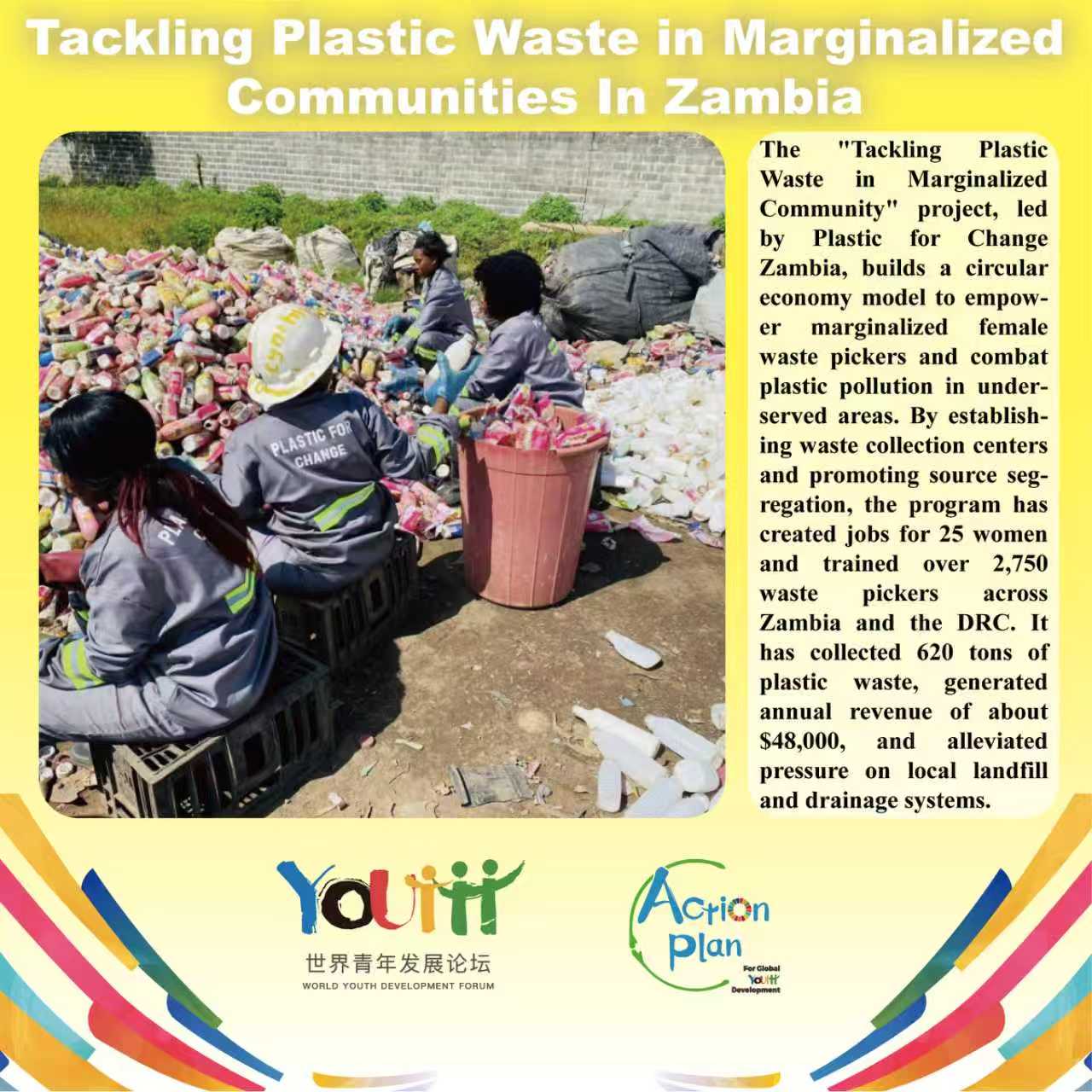
The Tackling Plastic Waste in Marginalized Communities in Zambia The "Tackling Plastic Waste in Marginalized Communities" project, led by Plastic for Change Zambia, builds a circular economy model to empower marginalized female waste pickers and combat plastic pollution in underserved areas. By establishing waste collection centers and promoting source segregation, the program has created jobs for 25 women and trained over 2,750 waste pickers across Zambia and the DRC. It has collected 620 tons of plastic waste, generated annual revenue of about $48,000, and alleviated pressure on local landfill and drainage systems.
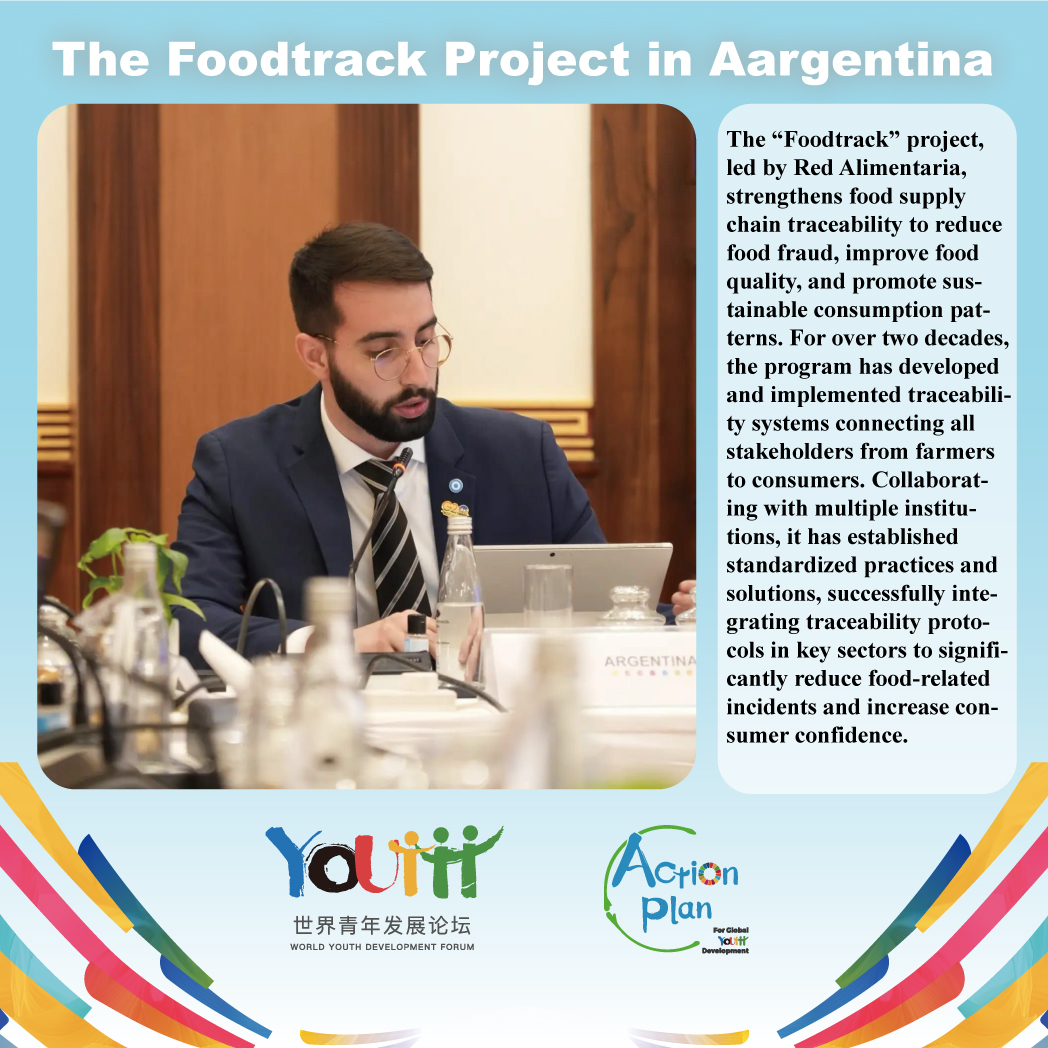
The “Foodtrack” project, led by Red Alimentaria, strengthens food supply chain traceability to reduce food fraud, improve food quality, and promote sustainable consumption patterns. For over two decades, the program has developed and implemented traceability systems connecting all stakeholders from farmers to consumers. Collaborating with multiple institutions, it has established standardized practices and solutions, successfully integrating traceability protocols in key sectors to significantly reduce food-related incidents and increase consumer confidence.
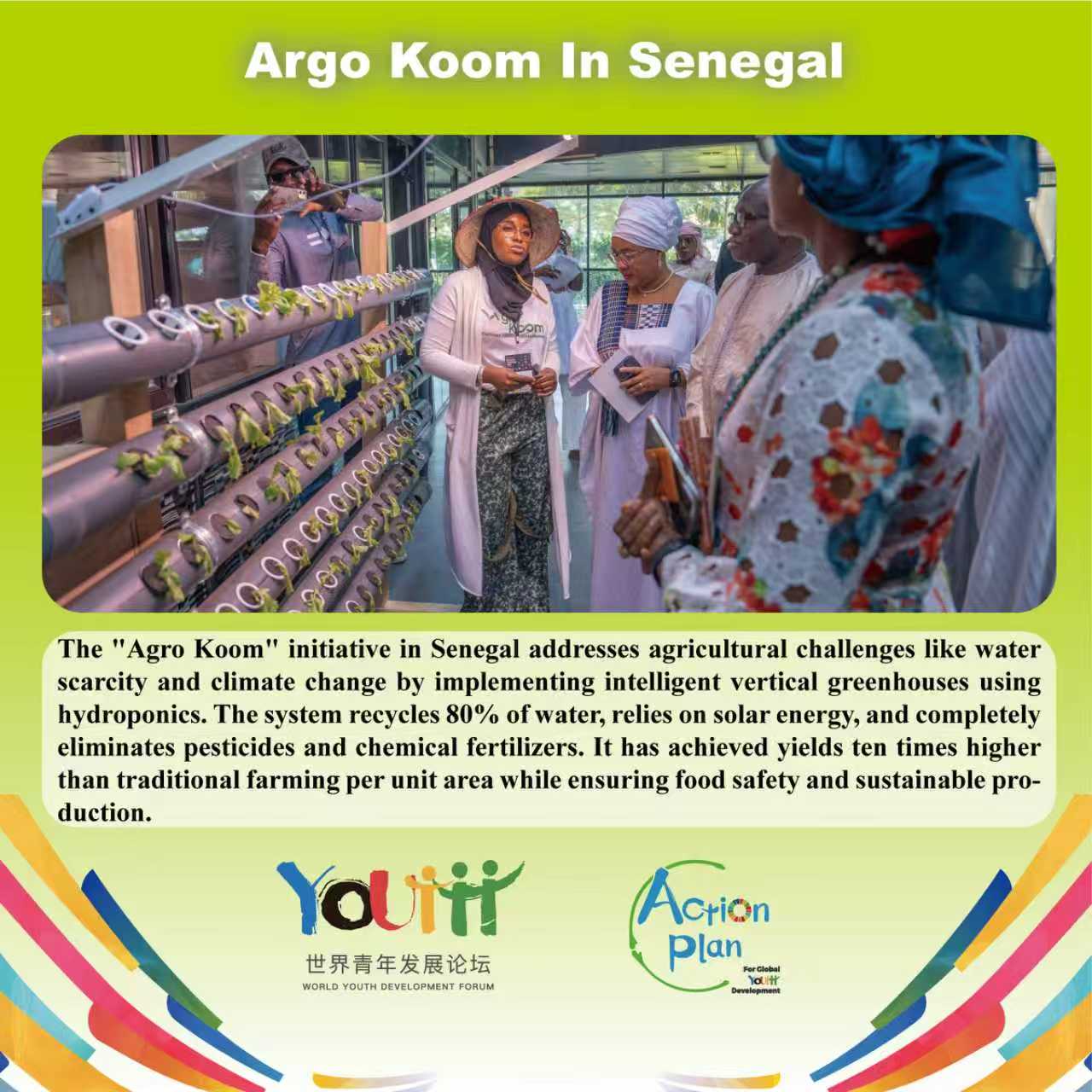
The Agro Koom Initiative in Senegal The "Agro Koom" initiative in Senegal addresses agricultural challenges like water scarcity and climate change by implementing intelligent vertical greenhouses using hydroponics. The system recycles 80% of water, relies on solar energy, and completely eliminates pesticides and chemical fertilizers. It has achieved yields ten times higher than traditional farming per unit area while ensuring food safety and sustainable production.
(Design by Wang Shuocheng, Dai Jing, Wang Junyang, Zhang Minyu, Liangyan,Zhai Qi)

