
Programs showcase丨Action Plan for Global Youth Development 2025(NO.6-NO.10)
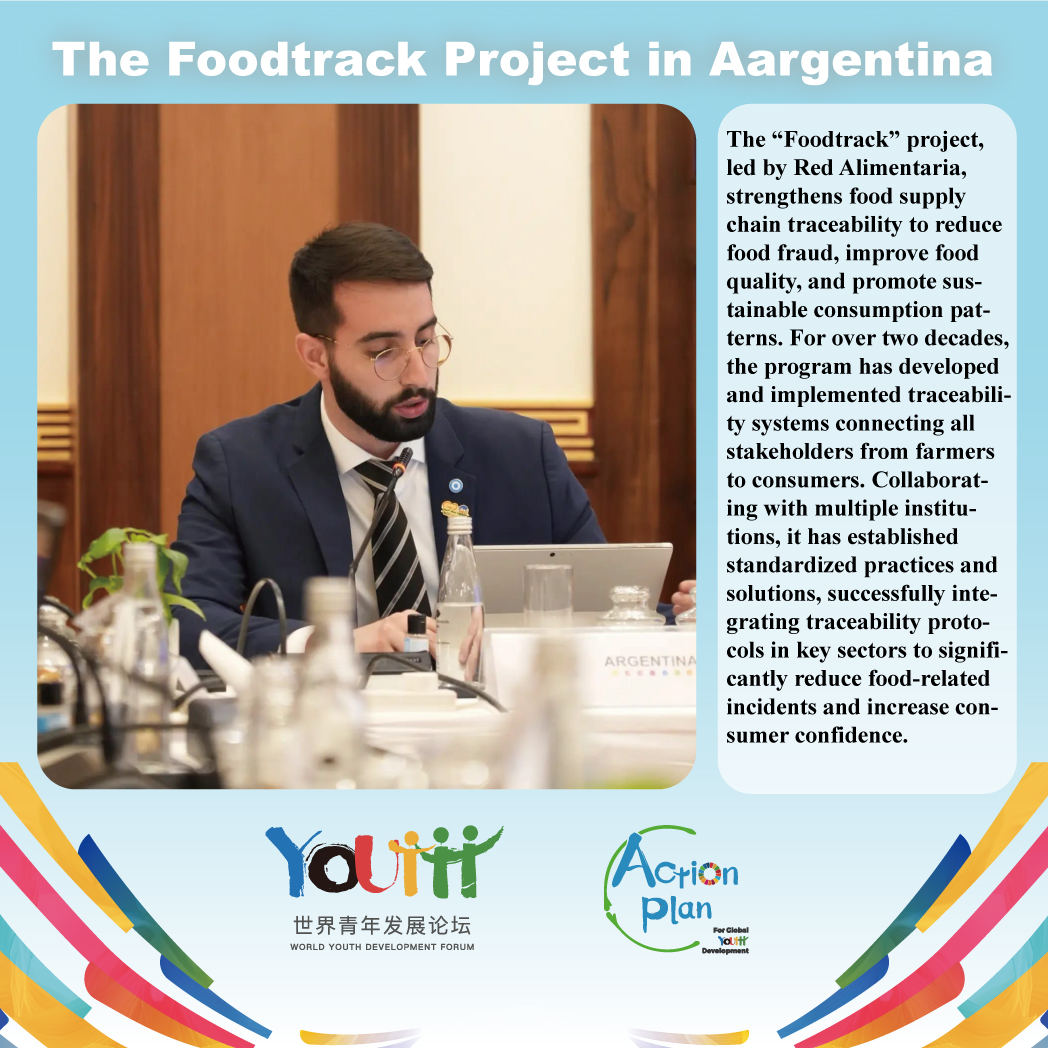
The “Foodtrack” project, led by Red Alimentaria, strengthens food supply chain traceability to reduce food fraud, improve food quality, and promote sustainable consumption patterns. For over two decades, the program has developed and implemented traceability systems connecting all stakeholders from farmers to consumers. Collaborating with multiple institutions, it has established standardized practices and solutions, successfully integrating traceability protocols in key sectors to significantly reduce food-related incidents and increase consumer confidence.
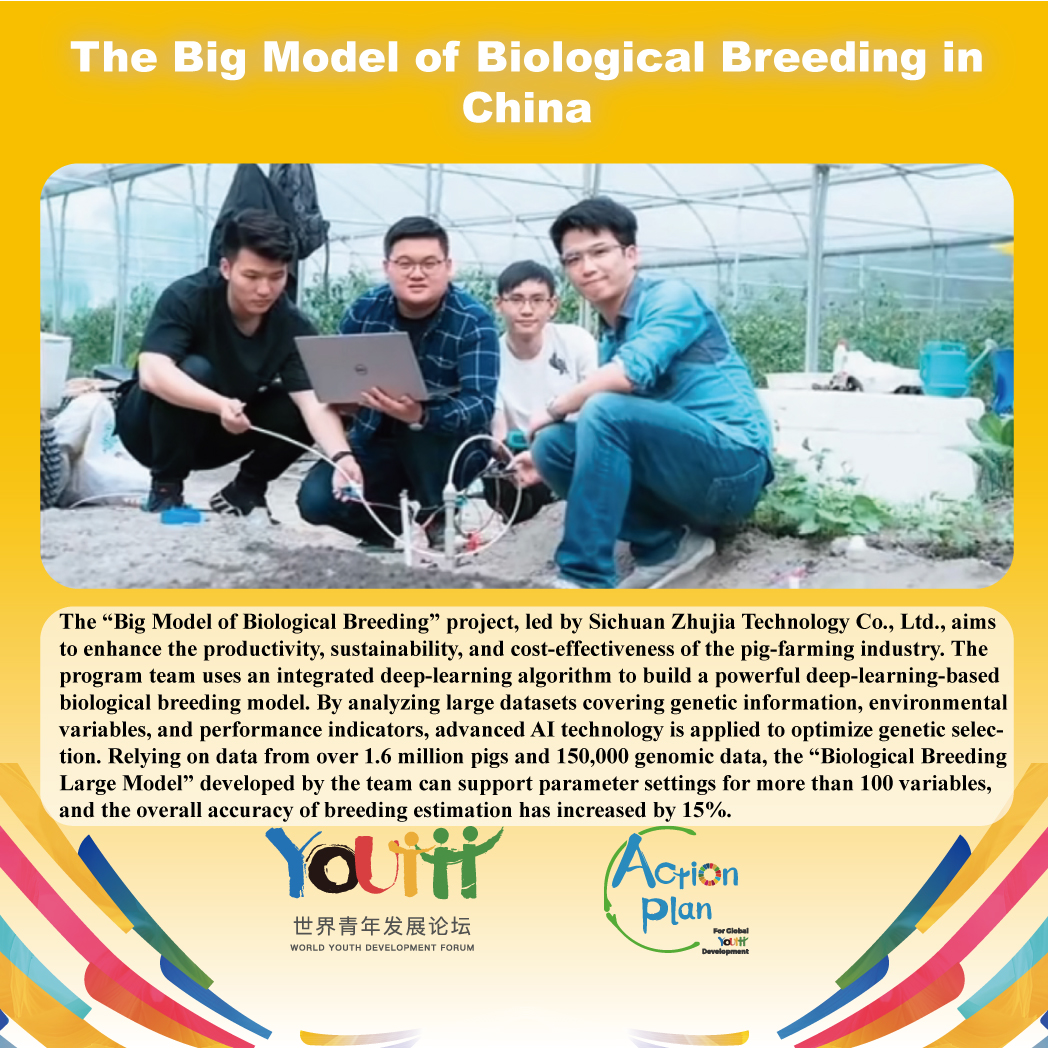
The “Big Model of Biological Breeding” project, led by Sichuan Zhujia Technology Co., Ltd., aims to enhance the productivity, sustainability, and cost-effectiveness of the pig-farming industry. The program team uses an integrated deep-learning algorithm to build a powerful deep-learning-based biological breeding model. By analyzing large datasets covering genetic information, environmental variables, and performance indicators, advanced AI technology is applied to optimize genetic selection. Relying on data from over 1.6 million pigs and 150,000 genomic data, the “Biological Breeding Large Model” developed by the team can support parameter settings for more than 100 variables, and the overall accuracy of breeding estimation has increased by 15%.

The “China-Laos Agricultural Volunteer” Program, led by Yingzhiyu (Beijing) Talent Technology Development Co., Ltd., aims to strengthen food supply chain traceability to reduce food fraud, improve food quality, and promote sustainable consumption patterns. It has integrated traceability protocols in key sectors, leading to a significant reduction in food-related incidents and increased consumer confidence.

The “Tuzeni Agro Project” project, led by Tuye Asset Investment, constructs a mutually beneficial agricultural ecosystem to tackle the food insecurity issue in Namibia and contribute to achieving UN SDG 1, 2 and 8. This program, through the model of youth agricultural entrepreneurship, has successfully added value to agricultural products and has won several international awards.
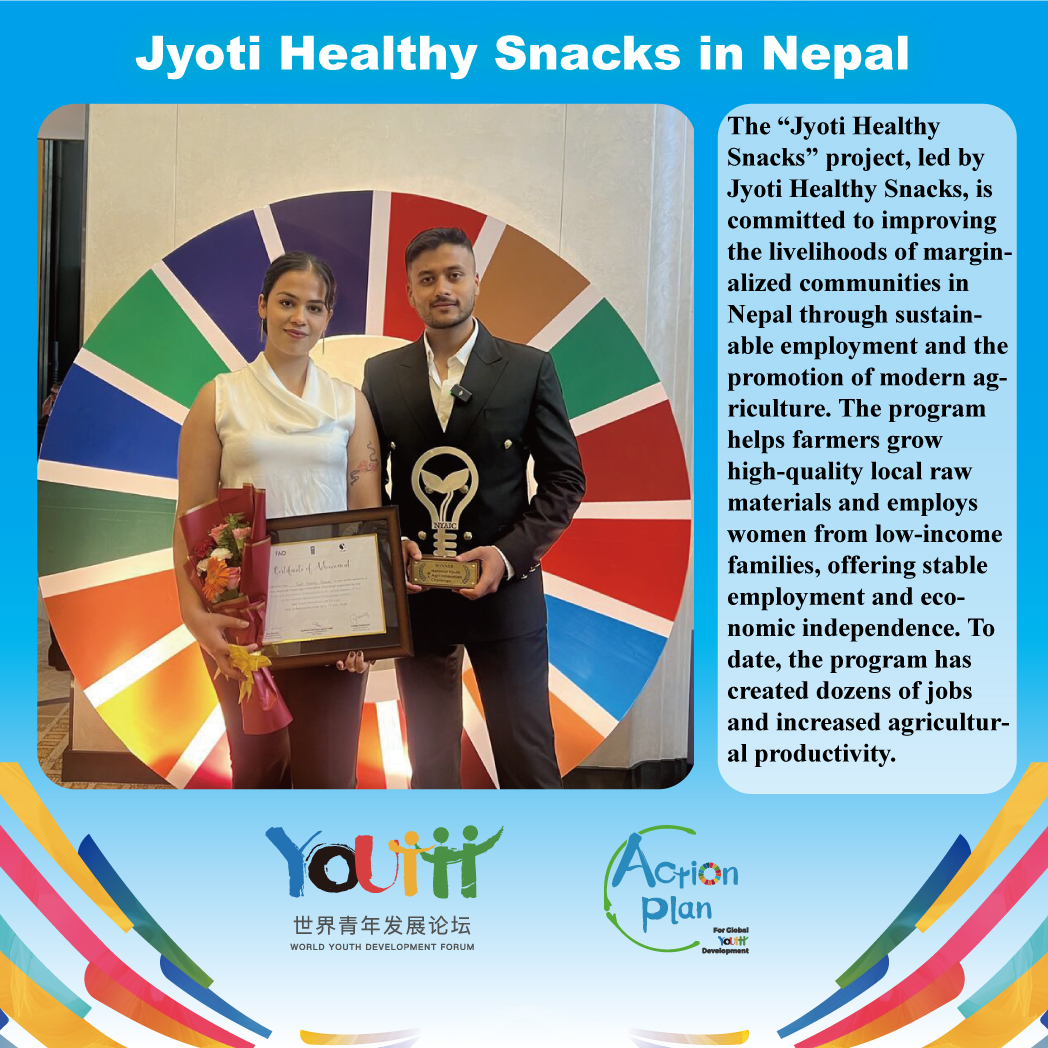
The “Jyoti Healthy Snacks” project, led by Jyoti Healthy Snacks, is committed to improving the livelihoods of marginalized communities in Nepal through sustainable employment and the promotion of modern agriculture. The program helps farmers grow high-quality local raw materials and employs women from low-income families, offering stable employment and economic independence. To date, the program has created dozens of jobs and increased agricultural productivity.
(By Wang Shuocheng, Dai Jing, Wang Junyang, Liang Yan)

