
Museum of flying reptiles in dinosaur age set to open
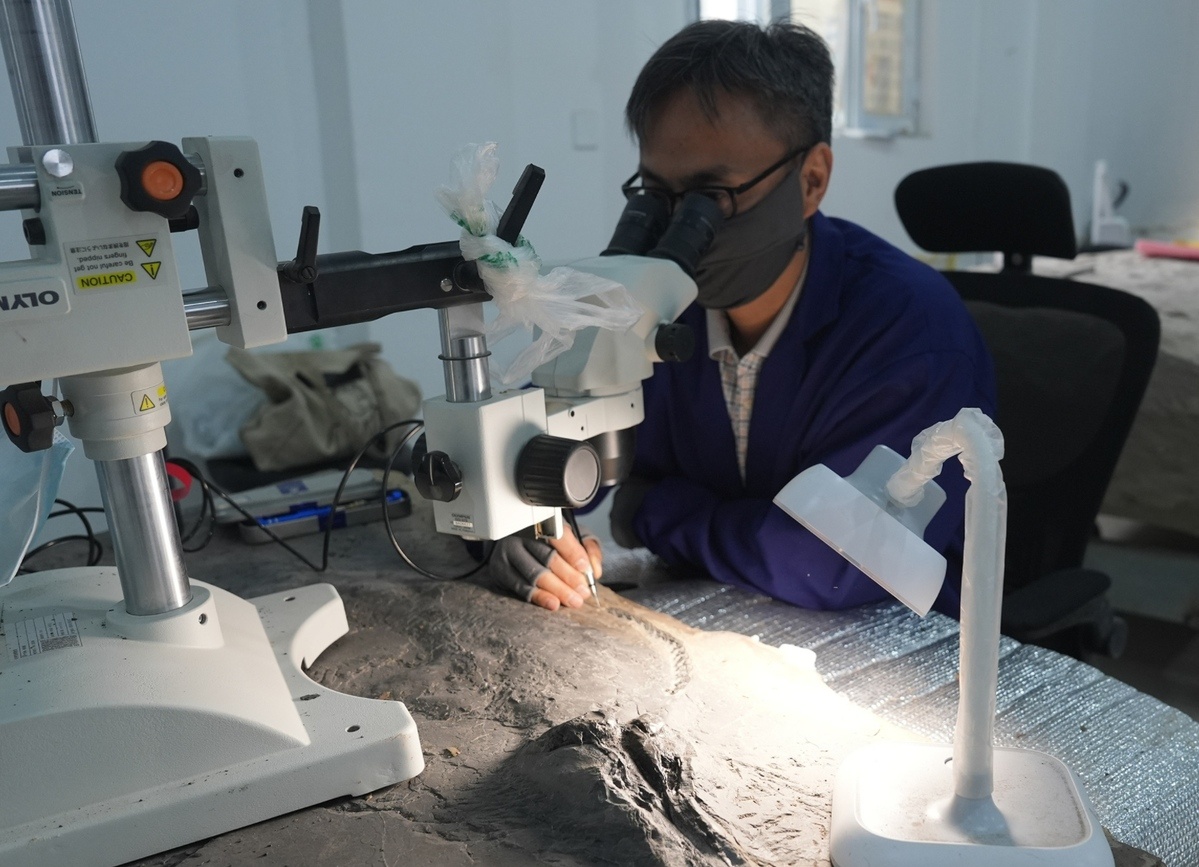
A museum specializing pterosaurs — warm-blooded flying reptiles in the age of dinosaurs — will open in Hami, Xinjiang Uygur autonomous region, in September. The opening will precede the 10th International Pterosaur Conference and the concurrent 18th Annual Meeting of the Chinese Society of Vertebrate Paleontology, which will be held in the city from Sept 11 to 14.
According to Wang Xiaolin, a researcher at the Institute of Vertebrate Paleontology and Paleoanthropology of the Chinese Academy of Sciences, the museum will be the world's first to be dedicated primarily to pterosaurs. He said the museum will explain the global distribution and evolution of pterosaurs and how they were discovered, along with scientific research achievements and a large number of pterosaur bones, eggs and fossil footprints.
The winged pterosaurs were among the earliest vertebrates on Earth to take to the skies. They are not dinosaurs but belong to a distinct branch of the vertebrate family tree, Wang told China News Service.
He and his team from the institute have been studying the fossils in Hami for more than a decade through field investigations, research and conservation. Their work shows that the pterosaur fossil distribution area in Hami's Gobi Desert is the world's largest and most densely populated pterosaur fossil site. The area spans thousands of square kilometers.
Within the core area of about 70 to 80 sq km, at least one pterosaur individual is buried on average per square meter, suggesting that tens of millions of pterosaurs thrived there during the Cretaceous Period — about 145 to 66 million years ago.
The team also identified the sex of some pterosaurs from the fossils. From eggs and embryos to juveniles, subadults and adults, the fossil remains span all growth stages, making the site something of a pterosaur Garden of Eden.
Among the Early Cretaceous Hami pterosaurs are three-dimensional preserved eggs and embryos — the first such specimens to be discovered anywhere. Those discoveries were reported in 2014 and 2017, respectively.
Wang said that in Hami, the strata from the Early Cretaceous, dating to about 120 to 130 million years ago, are predominantly found in aquatic deposits, which suggests that pterosaurs lived in colonies along lake shores, feeding on the abundant fish across more than 10,000 sq km.
Sudden catastrophic lake storms likely devastated the species, causing their bodies to be quickly torn apart and buried. Over time, the fossil-bearing yardang landscape — wind-carved hills or ridges found in arid and semi-arid environments — were formed, with fossils jumbled in hard rock geological structures.
Currently, the team is working on fossil restoration for the museum's opening, which has been ongoing for about a year and a half. Pterosaur egg fossils are particularly delicate, with shells that are only a few dozen micrometers thick. They require meticulous restoration under a microscope, as even slight pressure can cause them to break. Sometimes technicians can repair only one or two fragmented bones in a month, he said.
The pterosaur-themed museum is part of the Hami Pterosaur-Yardang National Geopark, which was granted national geopark status in March 2020. The area features the world's largest, most developed and visually striking yardang landform and is the only place along the ancient Silk Road where a yardang cluster has been found with signs of human habitation.

