
China's modernization offers new opportunities for shared prosperity, experts say
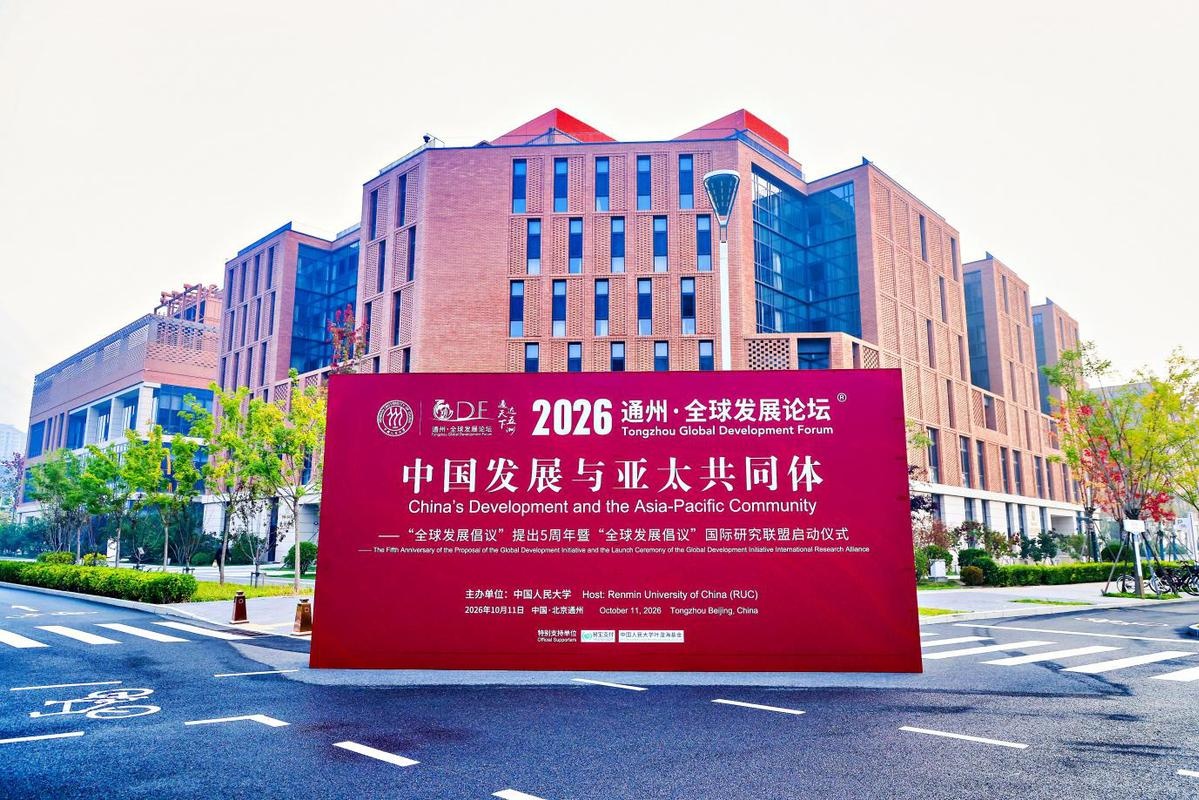
[Photo provided to chinadaily.com.cn]
China's modernization is creating new opportunities for regional and global development, with deeper practical cooperation and respect for differences key to turning those opportunities into shared prosperity, political leaders and experts said on Sunday.
They made the remarks at Renmin University of China's Tongzhou Global Development Forum (2026), which brought together more than 600 participants from over 40 countries.
Jenny Shipley, former prime minister of New Zealand, said Chinese modernization has provided important momentum for Asia-Pacific prosperity, opening up opportunities for the region's economies, particularly developing ones, to share in the benefits of development.
Countries should strengthen the sharing of technology and policy coordination to address common challenges — such as artificial intelligence governance and climate change — while ensuring that small and medium-sized countries, especially Pacific Island nations, are heard, she said.
Shipley emphasized mutual respect and the pursuit of common ground, calling for countries to use multilateral mechanisms such as the Asia-Pacific Economic Cooperation to build trust and turn cultural differences into strengths for cooperation.
Former Ethiopian president Mulatu Teshome highlighted the opportunities that Chinese modernization offers African countries seeking to move beyond their traditional role as suppliers of resources.
As Africa works to strengthen local processing and innovation, it looks forward to deeper cooperation with China in infrastructure, digital technology, skills development, and green growth, he said.
Modernization need not mean Westernization, Mulatu said, citing China's experience in industrialization, technological integration, and elimination of extreme poverty as important lessons for developing countries exploring their own paths.
He said the vision of a community with a shared future for humanity should take practical form through cooperation based on equality that advances African industrialization and shared prosperity.
Kevin Rudd, former prime minister of Australia, said that the shift in the global center of gravity toward Asia and the wider Asia-Pacific means that the region's future would be decisive for the world.
Countries should seek common ground while accommodating differences to prevent competition from escalating into confrontation, he said.
Rudd said China, the United States, and other countries should work together on sustainable development and deepening cooperation across regions and disciplines on issues directly affecting people's well-being. He identified AI safety and governance, climate change, and public health among the areas for joint efforts to build a more prosperous Asia-Pacific community.
Sergey Bodrunov, president of the Free Economic Society of Russia, said China has become an important force for global development as the world's economic and technological center of gravity moved toward Asia.
Development should be measured by more than economic growth, he said, emphasizing the importance of using knowledge creation and technological advances to serve people's all-around development. He called for deeper regional cooperation based on respect for sovereignty and the diversity of civilizations.
Zlatko Lagumdzija, former chairman of the Council of Ministers of Bosnia and Herzegovina, said widening development gaps and growing governance deficits underscored the need to reinvigorate multilateralism.
A multipolar world should be built on interdependence and shared governance, he said, calling for coordinated action on poverty reduction, climate change, and AI regulation to advance a fairer and more sustainable future.

